Monday, January 11, 2021

Has what it means to be human changed?

 In looking at the evolution of humanity, there are moments of turmoil and there are moments of celebration.  We know that to be human physically speaks to science, but does being human mean more than the basic definition?

Your blog this week is to examine your choice book and Hamlet in order to answer the question: Has what it means to be human changed throughout time?  

Pull in quotes from your texts, and if you want to look at your world, please do so. 

Your response should be about two paragraphs and then I am asking you to reply to at least two other people’s responses.  


Please have a great week! 

Monday, January 4, 2021

A new year. A new hope.

 Happy New Year!  

This week we start incorporating blogs into our weekly work.  These blogs are our place to respond to each other and to build our ideas about the world, literature, and poetry.  

For this week's blog, I am asking you to read the poem by Richard Blanco, "One Day."

Once you have read the poem, I want you to think about how new years bring with them new hopes and dreams.  Identify the dreams and hopes that you think we need as a country, a school, a community, and an individual.  

Your response explaining these hopes and dreams for the future should be about two-three paragraphs in length.  Please be sure to cite examples from the poem.

Once you have posted, please go back and read the responses of others and comment on at least three people's ideas.  

Monday, April 27, 2020

Jumping off of a line

For this weeks blog, you will watch the performance of the poem and then choose a line that resonates with you.  You will write your thoughts, a poem, or a journal entry based off of the line you choose.

We did something like this in class before.  Your response should be about one to two paragraphs.

Monday, April 20, 2020

Quotable

Happy Monday!

For this week’s blog, pull a quote from your choice book that you think is important. Analyze it and break it down explaining why it is important.

Your post should be one to two paragraphs.  Really pick your quote apart and explain how it speaks to the theme your see emerging in your novel.

Monday, April 13, 2020

What is valued?

Throughout Kettle Bottom, family is valued.  Through the different voices and the content of the pieces, family and the importance of family are commented on through the relationships of the spouses, parent and child, siblings, and friendships.

Think about what else is valued in this collection. Using three poems from the beginning, middle, and end of the collection, what is something else that is valued?  Explain how you arrived at your conclusion using the poems as your evidence.

Your response should be about one to two paragraphs with textual evidence to support your thinking.

Wednesday, April 1, 2020

Setting

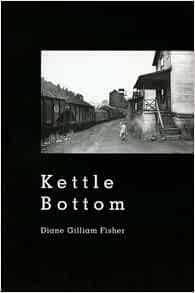
Kettle Bottom: Diane Gilliam Fisher: 9780966045970: Amazon.com: Books


In using one of the poems from Kettle Bottom, analyze what the poem reveals about the setting of the collection.

Look at the language, the voice of the characters, and the imagery used to create meaning.

Write an analysis of the setting from your poems using textual evidence to support your thinking. 

Your post should be two paragraphs in length.

Thursday, May 9, 2019

Final thoughts

It is time for us all to go in different directions.  It is never good bye because hearts filled with familiarity and love are never that far away.  This is still a school blog, but I encourage you all to write a final note or letter to your peers.  So, keep it clean and hopeful for the future is full and dreams are real.

Monday, April 22, 2019

Parent Child Relationships

Parent child relationships are the foundation for which all future relationships are formed.  In looking at the parent child relationships in Beloved and in one other text we have read this year, I want you to compare and contrast them and then explain what is revealed through these relationships.

Ex: Compare/contrast Hamlet and Gertrude to Sethe and Beloved.
Explain the relationship between Hamlet and his mother.
Explain the relationship between  Sethe and Beloved.

Then explain what both relationships reveal about this idea. Be sure to keep the entire text in mind when forming your deductions and in coming to conclusion.  Please have textual evidence to support your thinking.

Sunday, April 7, 2019

Faulkner’s Ideas

In this week’s blog, I want you to examine what Faulkner says in his Nobel Banquet Speech.   
Read his speech and determine if his novel As I Lay Dying does what he says is the role of the artist.

Write a letter to one of the characters using both the speech and the novel as your support to answer the question: Does the novel do what Faulkner says writers should do in a piece of writing?

Your letter should be a couple paragraphs answering the question and addressing a specific character.

Monday, March 11, 2019

Character Letter

I beleive in the power of letter writing.  Writing to a specific person is about trying to say something specifically to that person: an audience is given, a purpose for writing is given, and a common conversation is created. 

So, this week, I want you to write a letter to a character in Crime and Punishment.  In your letter, I want you to give them advice.  Explain to them what they have done and what you think they should do to fix the problem.  Be sure to examine not just the short term effects of the solution, but also the long term effects.  Look at the novel as a whole. 

Monday, March 4, 2019

Let’s talk about Power

This week we will explore power and how it is created, used, and the effects of power.  There are many different philosophies about power and how it is created.  Some take it, some earn it, some weasel their way into it, and some are asked to take it because they understand it.  

Some people abuse their power by working to oppress those under them, some use it to serve those  those under their command, some fail and are usurped by those who want to take it.  With the creation of power and the use of power come many different results. 


I want you to watch this clip from the movie, The Last Castle. This the basic storyline from IMDB: “Robert Redford stars in this action drama as General Irwin, a respected three-star tactician whose career ends in disgrace when he's court-martialed and sent to The Castle, a maximum security military prison. Irwin quickly butts heads with the facility's autocratic warden, Colonel Winter (James Gandolfini), who runs his command with an iron fist, even killing prisoners when he deems it necessary. Irwin rallies his fellow convicts into a rag-tag army and leads them in a revolt against Winter, an action that the warden is ready to repel by violent means.”      

Analyze the scene. Look at voice, behavior, body language, actual language, and the like to determine how the power dynamic between these two men works.  

Then, I want you to pick a scene from Crime and Punishment that you think illustrates a similiar rendition of power and explain how the film and the novel both establish commentary on power. You must have specific evidence from both pieces to support your answer. 

Monday, February 25, 2019

The Role of Art


Read this piece on Brainpickings: The Great Naturalist John Burroughs on Art, the Courage to Defy Convention, and the Measure of a Visionary.

In reading this piece, decide if you agree with what he is saying or not. Explain what you believe is the role of art and the artist. Then once you have explained what the role of art is society, determine if Dostoevsky has achieved your expectation of the role of art in the novel Crime and Punishment.

Be sure to include textual evidence from both the novel and the Brainpicking’s piece to support your thinking. As you go through, feel free to read your peer’s responses. If you feel so inclined, post a comment to a response. Be respectful and thoughtful in your response.

Monday, February 18, 2019

Shame

Listen to this podcast by Tracy K. Smith.  It is called The Slowdown.  Each week she features new poems and talks for about five minutes.  The poem I want you to examine is “In Memory of Shame.”

Look at what is being said about shame and how it is acquired and why it matters.  Analyze the poem and then apply this idea of shame to a character in your choice book.  Think about why they experience shame, who gave it to them, and how it has affected them.

You are looking at two-three full paragraphs for this post.

Sunday, February 10, 2019

Choice Books—a connection

    The things we read in this class are considered timeless in that they transcend a particular time and speak to what it means to be human.  The character flaws, the themes, the philosophical ideas all can be examined across a wide variety of literary genres and mediums.  
     With that being said, it is important that as readers of not just texts, but readers of the world, we should be able to recognize when these timeless conversations are present and how new time periods try to enter that conversation.  
      For your first blog, I want you to look at your choice book and choose one aspect—characters flaws, themes, philosophical ideas—and look around your world to do a comparison.  Choose one song, one film, one episode in a series, a poem, a video game, etc. and explain how you see the timelessness of your chosen text live and breathe within your chosen piece. 

     This should two-three paragraphs—please have textual evidence. 
     1. A description of the item you are analyzing in your choice book
     2. A description of the item you are analyzing in the chosen medium or genre 
     3. This is where you connect them together and reveal what you notice that is the same, different, 
         and why it matters. 


Wednesday, March 14, 2018

KB Poetry Analysis

     We have been reading Kettle Bottom and discussing the different poems.  For this week's blog, choose one of the pieces we have read and discussed and write an analysis of the poem.  
     In writing your analysis, be sure to explain who the speaker is and how the speaker helps to provide insight into this world.  You will also want to create a question you think the poem tries to answer in order to ascertain the theme. Be sure to include quotes from the poem to reinforce your analysis. 

Tuesday, March 6, 2018

Barriers

    Each of us comes from different families and with this comes the knowledge that our view of the world is different.  Because it is human nature to experience the world and see the world through our own eyes, it is crucial to be able to navigate it in such a way that we are able to meet our goals.
    With this knowledge, it requires us to identify our own barriers.  What will be placed in front of us not to block entirely, but to make us work harder?  What are the road blocks, the full stops, and the free passes?
    For example: I wear glasses.  This means that I cannot do certain jobs, but there are many other jobs I could choose from. Some other barriers that we have are because we choose to limit ourselves because of work ethic, perceived inadequacies, etc.
     In this week's blog, I want you to write about your own barriers and what they keep you from accomplishing.  Then I want you to look at the ones you put into place and think about how you can push beyond the barriers.  Once you have written about yourself, I want you to think about a character you have read about this year.  Examine their barriers and how those barriers were created, and how those barriers were overcome.  

Monday, February 26, 2018

Poem and Crime and Punishment


"The Undeniable Pressure of Existence" by Patricia Fargnoli is a poem we read in class. In looking at this poem, please explain with textual evidence what she is saying and what you think the title means. Once you have done this, apply what she is saying to one of the characters in Crime and Punishment.


Be mindful not to repeat what a peer has said.

Monday, February 19, 2018

Crime and Punishment Jigsaws

     This week we will begin unpacking Crime and Punishment.  We will have many discussions that will ask us to look beyond the text, apply philosophical ideas and to question our own beliefs.  
      Your blog this week is to take three ideas that are presented to you or that come up in discussion and explain how they change, extend, or validate your own thinking about the text.  Be sure to go to the text to find quotes to help in your explanations and analysis.  

Monday, February 12, 2018

Poems and Novels

Last week you wrote about a book that you deemed as your favorite so far this year.  This week, I want you to find a poem that you have either read before or one you have just been introduced to that connects to your book.  You must look at the book as a whole and the poem as a whole.  Do not make the connection based on a small part of each connecting.  

Copy and paste the poem in your post, and then explain how both of them are connected.  Your response will be a couple paragraphs with textual evidence from both. 

Sunday, February 4, 2018

Our reading journey

As this year has progressed, we have read many texts and looked at a variety of big ideas.  For this week's blog post, I would like for you to choose one of the books we have read this year that you believe is your favorite thus far.  

Once you have chosen, be sure to answer the following questions in your post:
1. Why is it your favorite?
2. How do you think it speaks beyond the pages of the text?
3. What are at least three quotes that really resonate with you?

EX: For me, I would have to choose Hamlet.  I fell in love with Hamlet when I was a senior in high school and every time I read it, I am moved beyond words by the emotions I feel.  I cannot say I have experienced the betrayal or loss that he has experienced.  But I understand feeling lost.  I understand asking the questions about who we are, why are we here, and do we even matter.  I don't ask them as someone who is melancholy.  I ask them as a way to genuinely work toward figuring out my role in the world.  I like these because they force me to ask questions and this is where knowledge comes.  I can also say, that my answers may change depending on where I am this world.  That is the beauty of literature.  We never come to a book as the same person we were the first time we read it.  


POLONIUS:
This above all: to thine own self be true,
And it must follow, as the night the day,
Thou canst not then be false to any man.(1.3.84-86)


Once upon a time, I had a phone case with this quote. It is a reminder that we cannot please others. We must be true to ourselves at all times. When it is time to question our integrity or to make choices, we must be true to what we think is right. We must always be ourselves.

HAMLET:
To sleep, perchance to dream—ay, there's the rub:
For in that sleep of death what dreams may come,
When we have shuffled off this mortal coil,
Must give us pause—there's the respect
That makes calamity of so long life. (3.1.66-70)


I can't quite put my finger on this one.  But for me, this is about what happens after.  Is the rest silence like he says later or is there more?  Are we simply bound by what we can do here and now, or can we be more? 


OPHELIA:
Lord, we know what we are, but know not what we may be.
God be at your table. (4.5.5-6)


I wonder if we know what we are? Are we stagnant or in a perpetual state of change constantly moving toward something else? We can say in this moment we are one thing, but the future is ours to create.